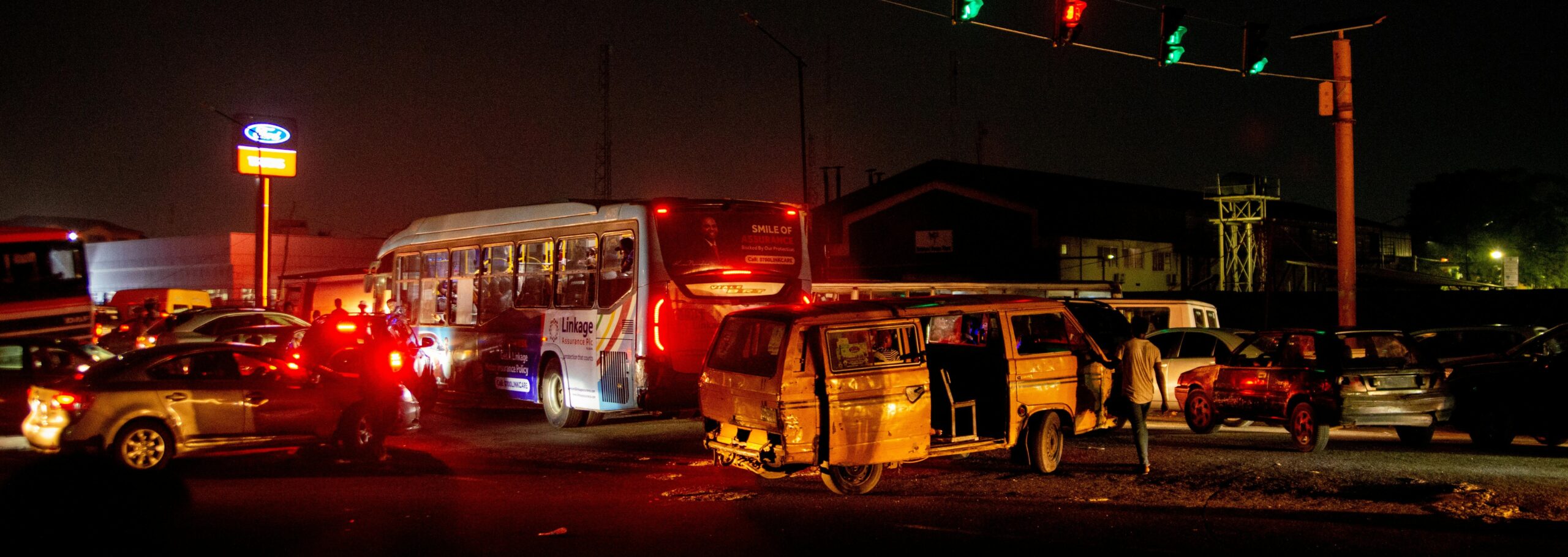
Successive Major Accidents in Thailand
―Collision at Railway Crossing, Fire during Transport of Lithium-Ion Battery―
[Key Takeaways]
- In May 2026, a series of major accidents occurred in Thailand. Combined with the crane collapse in January of this year, these incidents have highlighted structural issues in Thailand’s transportation infrastructure and hazardous materials management.
- On May 3, a truck transporting lithium batteries exploded and caught fire in Chachoengsao Province, damaging an elevated highway. On May 16, a freight train collided with a public bus at a railroad crossing in the Maccasan district of central Bangkok, killing eight people and injuring more than 26.
- To prevent the recurrence of these accidents, a three-pronged approach—infrastructure improvements, driver education, and regulations—is essential.
- When considering risk management for companies in Thailand, it is important to assess the risks associated with railroad crossings along employees’ commuting and travel routes, as well as to review the safety management systems of shuttle service providers and logistics contractors. Developing business continuity plans (BCPs) that account for prolonged closures of major arterial roads and verifying the coverage of various insurance policies are also practical priorities.
We extend our heartfelt condolences to those who lost their lives in the tragic accidents described in this report, and to their bereaved families. We also offer our sincere wishes for the swift and full recovery of all those who were injured.
Introduction
In the Kingdom of Thailand (hereinafter “Thailand”), a series of serious accidents involving public transportation and logistics has occurred since the beginning of 2026. On January 14 of this year, a construction crane used in the Thailand–China high-speed railway project collapsed onto a passing express train in Nakhon Ratchasima Province, resulting in more than 30 fatalities. This was followed on May 3 by an incident in which a truck carrying lithium-ion batteries exploded and caught fire on a major arterial road in the outskirts of Bangkok, damaging the structure of an elevated expressway. Furthermore, on May 16, a cargo train collided with a public bus at a railway crossing in central Bangkok, leaving at least eight people dead and more than twenty injured.
The fact that such a concentration of serious accidents has occurred over such a short period highlights structural challenges in safety management across Thailand’s transportation infrastructure, logistics system, and hazardous material handling. This report focuses in particular on two of the most recent accidents — (1) the cargo train–bus collision in the Makkasan area of Bangkok (May 16, 2026), and (2) the explosion and fire of a lithium battery transport truck in Chachoengsao Province (May 3, 2026) — and provides an overview of the accidents, similar incidents in recent years, an analysis of the causes, and accident prevention measures. The objective is to provide information that supports the risk management of Japanese-affiliated companies operating in Thailand and the safety of their employees.
Collision Between a Cargo Train and a Public Bus in the Makkasan Area of Bangkok
- Date, Time, and Location of the Accident
The accident occurred at approximately 3:40 p.m. on Saturday, May 16, 2026, at a railway crossing on Asok–Din Daeng Road in the Makkasan area of Ratchathewi District, Bangkok. The site is located near Makkasan Station of the Airport Rail Link (ARL), on a major arterial road close to an area where many Japanese expatriates reside.


© OpenStreetMap contributors / Open Database License (ODbL)
- Circumstances of the Accident
According to news reports, the train was Freight Train, traveling from Laem Chabang to Bang Sue Junction, and the bus was a BMTA-operated public bus on Route 206 (a route connecting the eastern suburbs to central Bangkok). At the time of the accident, the area was in a state of heavy road congestion, and the bus had come to a halt on top of the railway crossing while waiting at a red traffic light. The cargo train then collided with the stationary bus, pushing the wreckage along the tracks for approximately 50 meters and triggering a fire and explosions. The damage was not limited to bus passengers, but also affected several passenger cars and motorcycles in the vicinity. The accident site, where the collision occurred at approximately 3:40 p.m., is located on Asok–Din Daeng Road between the Rama IX intersection and the Asok–Phetchaburi intersection.
Initial reports placed the death toll at six, but this was later revised to eight, with the number of injured ultimately reported as 32 (with some reports indicating up to 35). Rescue teams continued firefighting and rescue operations on site into the late night hours. Prime Minister Anutin Charnvirakul ordered a full investigation following the incident.

© Bangkok Metropolitan Administration
[https://www.facebook.com/bangkokbma/posts/pfbid0AXAq6oSJ8yGXhhDh2MeKx9RkQFMsaZD9R
wZ8Yf76wxDqS1hrzrfmH2xVSDyD3cP7l©Bangkok Metropolitan Administration]
- Initial Reports on the Cause of the Accident
According to the Deputy Minister of Transport of Thailand, the traffic signal near the railway crossing was red and the bus had attempted to stop before the crossing, but due to road congestion ended up stopping on the crossing itself. Normally, when a train approaches, the barriers descend and the warning alarm sounds; however, because the bus body was within the range in which the barriers operate, it is suggested that the barriers may not have fully descended, and therefore the stop-signal function towards the approaching train may not have been adequately triggered. The cargo train, which due to its heavy weight requires a long braking distance, was unable to come to a complete stop after sighting the obstacle and consequently collided with the stationary bus.
The Commissioner-General of the Royal Thai Police also visited the scene on the night of the accident and stated, based on CCTV footage, that “it is clear that the bus was stopped on the railway crossing.” The State Railway of Thailand (SRT) reiterated its warning regarding Article 63 of the Land Traffic Act, which prohibits stopping on railway tracks and requires vehicles to stop at least five meters before them. The crossing in question had been repeatedly identified on social media even prior to this accident as a location where vehicles waiting at the traffic signal would often stop on the tracks, indicating that the site had been recognized as structurally and continuously dangerous.
Explosion and Fire of a Lithium Battery Transport Truck in Chachoengsao Province
- Date, Time, and Location of the Accident
The accident occurred at approximately 7:30 p.m. on Sunday, May 3, 2026, on the inbound (Bangkok-bound) express lane of Theparat Road (also known as Bang Na–Trat Road, Highway 34), at around the 40-kilometer marker, in Tambon Bang Wua, Bang Pakong District, Chachoengsao Province, in central Thailand. The elevated Burapha Withi Expressway runs directly above the accident site, and the heat from the flames also reached the elevated section.

© OpenStreetMap contributors / Open Database License (ODbL)
- Circumstances of the Accident
A white 10-wheel truck (reported by some sources as a 6-wheel truck) registered in Nakhon Pathom Province, while traveling with a cargo of lithium-ion batteries, caught fire. The intense blaze was accompanied by continuous explosions. Eight fire engines were dispatched to the scene, and firefighters first attempted to extinguish the fire with water, which proved ineffective. They then used firefighting foam, but due to the thermal runaway phenomenon inherent to lithium-ion batteries, the chemical reactions continued and reignition occurred even after temporary suppression, making the firefighting operation extremely difficult.
The structure of the elevated Burapha Withi Expressway also suffered damage, with portions of the concrete surface peeling off due to the heat. The Expressway Authority of Thailand (EXAT) conducted a structural inspection on the morning of May 4, confirmed that the structural strength and form of the expressway had not been compromised, and reopened the affected section. The main lanes at ground level, however, were temporarily closed pending further structural inspection. The accident caused severe congestion on surrounding roads, with the authorities advising motorists to allow an additional one to two hours of travel time or to use Motorway Route 7 as an alternative.

© EXAT
[https://www.facebook.com/photo/?fbid=1268546538784251&set=a.241352548170327 © EXAT]
- Reports on the Cause of the Accident and Transport Practices
The truck driver escaped from the vehicle unscathed after the accident, but told police that he “was only hired to drive the truck and had not been informed of the details of the cargo.” The departure point was reportedly a factory in Plaeng Yao District of Chachoengsao Province, and the destination was Samut Sakhon Province. The Thai police are investigating whether the documentation and procedures related to the transportation of lithium batteries complied with the relevant regulations, including the safety management arrangements at the factory of origin.

© OpenStreetMap contributors / Open Database License (ODbL)
In Thailand, Safety Regulations in accordance with the European Agreement on the Transport of Dangerous Goods (ADR) according to the Regulations of the Ministry of Transport of Thailand, 2015 and Notification of the Department of Land Transport regarding Transportation Documents for Hazardous Substance Transporting Vehicles B.E. 2563 (2020), the Department of Land Transport, Ministry of Transport, Thailand, and other regulations for the overland transportation of dangerous goods. However, in this accident, the investigation focused on the existence and legality of transport documents, and the safety management system at the starting plant, highlighting issues in the field operation of the regulations.
Similar Accidents in Recent Years
This chapter presents notable accidents in recent years that are similar to the two cases described above, organized into two categories: 1. accidents involving railway crossings and public transportation in Thailand, and 2. vehicle fires caused by lithium-ion batteries.
1. Serious Accidents Involving Railway Crossings and Railways in Thailand
case 1: Railway crossing Accident near Khlong Kwaeng Klan Station, Chachoengsao Province (October 2020)
At approximately 8:05 a.m. on October 11, 2020, at a railway crossing near Khlong Kwaeng Klan railway station in Chachoengsao Province, located about 50 kilometers east of Bangkok, a chartered bus collided with a cargo train heading from the east towards the capital. The bus was carrying approximately 60 passengers, who were on their way to a Buddhist temple in Chachoengsao Province for a Kathin ceremony held within one month of the end of the rainy season. The bus was flipped on its right side and the roof of the vehicle was torn off, resulting in at least 18 fatalities and more than 40 injuries. The crossing was equipped only with an alarm and had no barrier (gate), and visibility was poor. Following the accident, Chachoengsao Governor Maitree Tritilanond announced enhanced safety measures around the crossing as a countermeasure to prevent recurrence.
case2: Cargo Train Collision at an Unauthorized Railway crossing in Chachoengsao Province (August 2023)
At approximately 2:20 a.m. on August 4, 2023, at an unauthorized railway crossing in Mueang District, Chachoengsao Province (near Khlong Udom Chonlajorn station), a cargo train traveling from Latkrabang to Laem Chabang collided with a pickup truck carrying workers, resulting in 8 fatalities and 4 injuries. The crossing in question was not equipped with automatic barriers and had only warning lights and an alarm system. The driver reportedly recognized the approaching train and heard its warning whistle three times but, urged by passengers to continue, was unable to stop in time and the collision ensued. This incident prompted the State Railway of Thailand (SRT) to announce a plan to close 693 illegal railway crossings across the country. According to SRT data at the time, 693 of Thailand’s 2,697 railway crossings (approximately 26%) were unauthorized, and of the 437 train-related accidents recorded between 2005 and 2021, about 44% occurred at unofficial railway crossings.
case 3: School Bus Fire in Pathum Thani Province (October 2024)
At approximately 12:29 p.m. on October 1, 2024, a chartered bus traveling in Pathum Thani Province, in the outskirts of Bangkok, lost control after the front tire burst, struck a passing passenger car, crashed into the central median, and caught fire. The bus was a 54-year-old registered in 1970, and was on a field trip from Wat Khao Phraya Sangkharam School in Uthai Thani Province to Ayutthaya and Nonthaburi Provinces. The bus ran on compressed natural gas (CNG), and a subsequent investigation revealed illegal modifications of the CNG system (five additional gas tanks installed, adding approximately 875 kg of excess weight). The shock from the tire blowout caused gas leakage and ignition. Of the 44 passengers on board (6 teachers and 38 students), 20 students and 3 teachers — a total of 23 — were killed at the scene (with 2 more deaths bringing the total to 25). In September 2025, the Thanyaburi Provincial Court handed down guilty verdicts with suspended sentences to the bus owners (a father and daughter) and the driver.
case 4: Construction Crane Collapse in Nakhon Ratchasima Province (January 2026)
At approximately 9:13 a.m. on January 14, 2026, a large construction crane fell from an elevated section under construction as part of the Bangkok–Nong Khai high-speed railway project (a joint Thai–Chinese initiative) in northeastern Thailand, striking Special Express Train No. 21 bound from Bangkok to Ubon Ratchathani between Nong Nam Khun and Sikhio stations. The train was carrying 195 passengers and crew at the time; three carriages derailed and overturned, and a fire broke out following the derailment. The final toll was 32 deaths and more than 64 injuries. Several days of heavy rainfall prior to the accident were reported as a contributing factor. Prime Minister Anutin Charnvirakul ordered a full investigation immediately after the accident. The incident drew severe criticism regarding the inadequacy of safety management in the construction industry.
2. Vehicle Fires Attributable to Lithium-Ion Batteries
case 1: Electric Vehicle Smoke Incident During Charging in Udon Thani Province (September 2023)
At approximately 2:00 p.m. on September 3, 2023, at a charging station in front of a department store within the municipal area of Mueang Udon Thani District, Udon Thani Province, in northeastern Thailand, a BYD ATTO 3 that had been purchased only about a week earlier emitted smoke while undergoing DC fast charging. The owner had left the vehicle to charge while shopping; when the battery state of charge reached 50%, white smoke began rising from beneath the bonnet. The owner had mall staff use a fire extinguisher, and the Mueang Udon Thani Police Station and local fire services responded using firefighting foam and water.
The subsequent investigation concluded that heat generated by damage to wiring connected to the 12V auxiliary battery (a lead-acid battery) had burnt through an adjacent air-conditioning refrigerant pipe, and the leaked refrigerant reacted with the heat to produce the white smoke. No damage was identified in the electric control module or the high-voltage traction battery itself, and no flame was confirmed to have occurred. This case received attention as a representative EV charging-related incident in Thailand and served as an important trigger for renewed examination of the safety of the country’s rapidly expanding EV adoption and charging infrastructure.
case 2: BMTA Electric Bus Vehicle Fire in the Makkasan Area of Bangkok (April 2023)
At approximately 11:30 p.m. on Saturday, April 8, 2023, an electric bus operated by the BMTA caught fire beneath an elevated road structure near the Pratunam intersection on Phetchaburi Road in Bangkok. The vehicle was an air-conditioned electric bus operating on the Ramkhamhaeng University–Victory Monument route (with no passengers on board at the time). The driver had departed from the second Ramkhamhaeng University bus depot, and upon reaching the Pratunam intersection, he changed lanes to the right to avoid a parked vehicle in the left lane. He failed to notice an elevated bridge beam protruding overhead, and the roof of the bus struck the beam, with the resulting impact reportedly leading to the fire.
Firefighters who responded to the alert sprayed water onto the roof of the vehicle, and the fire was brought under control in about 30 minutes. As the bus was operating without passengers at the time, no human casualties were reported; however, the roof of the bus was burned and the vehicle was rendered inoperable. Reports do not specify in detail the direct cause of the fire (in particular, whether the lithium-ion battery pack mounted on the roof was the direct ignition source); however, given that the battery pack’s placement on the upper part of the EV bus can easily be damaged by contact with bridge beams, the case attracts attention as an important example regarding the operational safety of urban EV public transport vehicles.
case 3: Lithium Battery Transport Truck Fire on Interstate 15, California, U.S. (July 2024)
At approximately 6:38 a.m. on July 26, 2024, on northbound Interstate 15 at around Mile Marker 113 near Baker, California, a semi-trailer carrying six industrial-grade lithium batteries overturned, leaking fuel and oil, and its cargo caught fire. The container holding the batteries weighed a total of approximately 75,000 pounds (about 34 tons; some reports cited a range of 60,000 to 70,000 pounds), and due to the thermal runaway of the lithium batteries, the fire continued to burn for more than 40 hours, with about 40 miles (approximately 64 km) of northbound I-15 closed for about two days. This was reportedly the first case in the United States of a long-term highway closure caused by a lithium battery fire.
case 4: Truck Overturn and Lithium Battery Fire in San Pedro, Los Angeles, U.S. (September 2024)
Just before noon on September 26, 2024, near Terminal Island in the San Pedro area of Los Angeles (near 940 North Seaside Avenue), a semi-trailer carrying large lithium-ion batteries overturned and caught fire. Off-gassing from the batteries and at least one battery explosion were reported. The Los Angeles Fire Department decided that spraying water would not effectively extinguish the lithium battery fire and would create an environmental risk by sending contaminated runoff into the ocean. As a result, the LAFD chose “not to attempt firefighting and to allow the fire to burn itself out”. Freeway 47 and its part Vincent Thomas Bridge were closed in both directions. The closure lasted approximately 36 hours (Freeway 47 reopened late on September 27 and the bridge reopened by the morning of September 28), with operations at some terminals at the Ports of Los Angeles and Long Beach also halted. The case once again confirmed that lithium battery fires are difficult to extinguish with water or foam and that in many cases there is little option but to allow the fire to burn itself out.


© OpenStreetMap contributors / Open Database License (ODbL)
Analysis of the Causes of the Accidents in May 2026
1. Causes of the Makkasan railway crossing accident in Bangkok
The following factors are considered to have acted in combination.
1. Direct Cause
– Vehicle stopped on the railway crossing: The bus driver, caught in heavy road congestion, was unable to stop before the crossing and instead came to a halt on top of it. The obligation under Article 63 of the Thai Land Traffic Act to stop at least five meters before railway tracks appears not to have been complied with.
– Incomplete operation of the crossing barrier: Because the bus body was positioned within the operating range of the barrier, the barrier may not have fully descended, possibly preventing the stop-signal function towards the approaching train from working adequately.
– Insufficient braking distance for the train: A cargo train hauling heavy freight has a long braking distance, making it physically difficult to bring the train to a stop after sighting an obstacle on the crossing.
2. Structural and Background Factors
– The crossing in question had been repeatedly identified on social media even before the accident as a location where vehicles waiting at the traffic signal would stop on the tracks, and was known as a structurally high-risk site.
– Bangkok is one of the world’s most congested cities, and many urban areas lack adequate “queuing space” in front of railway crossings to allow safe stopping.
– Among Thailand’s railway crossings, 693 out of a total of 2,697 (approximately 26%) have historically been classified as “unofficial” or unauthorized crossings, with many cases of inadequate or missing signaling devices and barriers. The regional breakdown of the 693 unofficial railway crossings was as follows: 52 in the north, 54 in the northeast, 68 in the east, and 519 in the south.
– The dissemination and enforcement of railway crossing traffic rules (particularly Articles 62 and 63 of the Land Traffic Act) among drivers remains insufficient.
2. Causes of the lithium-ion battery transportation truck explosion and fire
We will analyze the causes of the lithium-ion battery truck explosion and fire from three perspectives: direct factors, logistics and management factors, and infrastructure-related factors.
1. Direct Cause
The cause is currently under investigation, but based on news reports and lessons from similar cases, any one of the following (or a combination thereof) may have triggered the incident:
– Internal short circuit (ignition due to short circuit) caused by vibration or impact during transportation.
– Heat accumulation in the cargo compartment due to rising ambient temperatures (in Thailand’s dry and hot seasons, temperatures can approach 40°C).
– Internal defects in the cells due to manufacturing defects, prior damage, or improper storage or charging conditions (such as overcharging).
– Chain reaction of thermal runaway after initial ignition (heating and ignition of adjacent cells one after another).
2. Factors Relating to Logistics and Management
– The possibility that the driver was unaware of the details of the cargo and lacked awareness that it constituted a hazardous material.
– Uncertainty as to whether the procedures required for hazardous-material transport — such as pre-loading inspection of the batteries, packaging, securing, and temperature control — were properly carried out at the factory of origin.
– A gap between the legal framework applicable to lithium battery transport in Thailand and actual operational practice.
– When extinguishing fires involving large quantities of lithium-ion batteries that are burning explosively, neither water nor foam may be effective in bringing the fire under control, and there is a risk that thermal runaway cannot be stopped. This is a structural factor inherent to the material properties of the batteries that makes “escalation of damage after ignition” virtually unavoidable.
3. Secondary Impact on Infrastructure
In this case, the intense heat from the ground-level truck fire reached the concrete structure of the elevated expressway above (the Burapha Withi Expressway), causing surface peeling. In the design of routes along which hazardous-material transport vehicles pass beneath elevated structures, it is possible that the fire scenarios that should have been assumed — taking into account the thermal impact on the structure — were not sufficiently considered.
Accident Prevention Measures
1. Measures to Prevent Railway crossing Accidents
1. From the Perspective of Infrastructure Development
– Systematic closure of unofficial (unauthorized) railway crossings and standardization of official crossings with signals, barriers, and warning devices.
– Planned investment in grade separation (elevated or underground crossings) at urban crossings with heavy traffic volumes.
– Clear marking of “stop lines” before crossings and provision of queuing space, together with road design that physically discourages stopping within the crossing (for example, by introducing grid-pattern “keep clear” markings on the crossing itself).
– Introduction of AI-based camera systems or IR sensors to automatically detect vehicles stopped on crossings, linked with real-time alerts to train drivers and dispatch centers.
2. Raising Awareness Among Drivers and Users
– Institutionalization of periodic refresher training for professional drivers (in particular, bus and truck drivers) on the rules for crossing railway tracks (Articles 62 and 63 of the Land Traffic Act).
– Public awareness campaigns to promote strict observance of the rule that drivers should not enter a crossing until the road ahead is clear.
– For expatriates and resident foreigners, dissemination of the importance of stopping before crossings when driving private cars or using taxis, and of the option of disembarking from public transport vehicles that stop just before a crossing.
3. Measures by Railway Operators
– Codification and rigorous implementation of obligations for all train types — including cargo trains — to slow down when approaching railway crossings.
– Phased introduction of stop-position detection systems (such as ATS linked to railway crossings) that take braking distances into account.
– To treat locations where safety concerns have been raised in the past on social media and other platforms as near-miss incidents and prioritize them for improvement.
2. Measures to Reduce Fire and Explosion Risks Associated with Lithium Battery Transport Vehicles
1. Pre-Transportation Management
– Rigorous confirmation of compliance with international standards such as UN 38.3 testing, both at the level of individual cells and at the level of battery packs, prior to shipment.
– Extending to land transport the practice — already applied to air transport (for example, capping the state of charge at no more than 30%) — of managing lithium batteries within a defined SOC range during transportation.
– Compliance with standards for packaging and securing (impact resistance, insulation, heat resistance) and retention of shipping inspection records.
– Mandatory advance notification to drivers that their cargo qualifies as hazardous material, and a requirement that transport documentation (a description of the dangerous goods and an emergency response procedure) accompany the vehicle.
2. Management During Transportation
– Installation of temperature sensors and smoke detectors on each vehicle, together with real-time remote monitoring and an immediate alert and notification system in the event of an anomaly.
– Avoidance of transportation during periods of high temperature (in Thailand, typically the peak daytime hours) or use of vehicles equipped with cooling capabilities.
– Training of drivers to recognize the early signs of thermal runaway (unusual odor, smoke, rising temperature) and development of emergency procedures for stopping, evacuating, and reporting.
– Development of route maps with travel restrictions for routes — such as those passing under elevated roads or through long tunnels — where secondary damage from a fire would be severe.
3. Emergency Response and Firefighting Tactics
– Institutionalization of joint training between fire services that handle lithium-battery fire risk and logistics operators, taking into account that small amount of water and foam alone are insufficient for extinguishing lithium battery fires.
– Ensuring a system capable of continuously supplying sufficient quantities of water (hydrants, water tanker arrangements) and pre-confirming the tactical option of “focusing on preventing spread until the fire burns itself out” at the scene.
– Continuous monitoring of battery temperatures using thermal imaging cameras and the maintenance of the scene for at least 24 hours, in light of the risk of reignition.
– Planning for prompt evacuation guidance for surrounding vehicles, pedestrians, and structures in order to prevent the spread of damage.
4. Regulatory and Institutional Aspects
– Establishment of a clear regulatory framework in Thailand for the land transportation of lithium batteries (covering licensing, vehicle standards, driver qualifications, route restrictions, and the like).
– Consideration of a system for the advance declaration and registration of transportation routes originating from lithium battery manufacturing plants and warehouses.
– Mandatory pre-transport confirmation by companies (in particular, shippers) equivalent to a “hazardous material classification certificate,” and establishment of a system for information sharing with transportation contractors.
Implications for the Risk Management of Companies Operating in Thailand
The following points should be borne in mind by companies operating in Thailand:
– Assessment of railway crossing risks on the commuting and travel routes of employees (expatriates and business travelers). Crossings on major arterial roads such as Sukhumvit Road, Rama IX Road, and Asok Road require particular attention.
– Clarification of driver safety education requirements when contracting for company vehicles or commuter buses for employees (including observance of stopping before railway crossings and understanding of the characteristics of CNG and EV vehicles).
– Review of the logistics internal regulations and the safety management framework of contracted logistics operators at companies that manufacture or transport lithium batteries or battery-powered products.
– As part of business continuity planning (BCP), preparation of alternative arrangements for supply chains and employee commuting routes that anticipate prolonged closures of major arterial roads and traffic restrictions resulting from elevated-road inspections.
– From an insurance perspective, confirmation of the scope of coverage of cargo insurance, freight forwarder liability insurance, and property insurance covering fire and explosion risks for facilities and structures.
Summary
Since the beginning of 2026, Thailand has experienced a succession of serious accidents involving public transportation and logistics. The explosion and fire of the lithium battery transport truck on May 3 and the cargo train–bus collision at a railway crossing in central Bangkok on May 16, both addressed in this report, should be understood not as isolated accidental events but as manifestations of structural challenges in Thailand — namely the state of transportation infrastructure, the gap between regulations governing hazardous-material transport and their actual implementation, and the depth of penetration of safety education.
In particular, the Makkasan railway crossing accident occurred at a location where risks had been continuously flagged even prior to the accident, and the absence of an effective mechanism to aggregate near-miss information and prioritize countermeasures stands out as an important point of reflection. With respect to the lithium battery transport vehicle fire, the fact that the driver was unaware that the cargo qualified as hazardous material, together with the secondary damage to an elevated structure caused by firefighting difficulties due to thermal runaway, has left issues unresolved in both transport route design and emergency response arrangements.
Preventing such accidents requires a three-layered approach combining infrastructure development, thorough education of drivers and on-site workers, and institutional design that bridges the gap between regulation and operational practice. Practitioners at companies operating in Thailand are encouraged to translate the accident patterns and preventive measures organized in this report into concrete risk management activities — such as assessing employee commuting-route risks, reviewing the safety management of contracted logistics operators, revising business continuity plans, and verifying the coverage of various insurance policies.
The information referenced in this report is based on publicly available news coverage, and the final determination of the causes of these accidents requires reference to the official investigation results published by the relevant authorities. It is desirable that the development of follow-up reports and investigation findings be continuously monitored and reflected in each company’s own safety management framework as appropriate.
InterRisk Asia (Thailand) Co., Ltd.
Assistant Manager Akimasa Tsutsumi
Reference
- NewsTomo, “Bangkok-no fumikiri de ressha to basu ga shototsushi 8-nin ga shibo, kasai to bakuhatsu mo hassei” (Train collides with bus at Bangkok railway crossing, killing 8; fire and explosion also occur) (May 16, 2026) https://newstomo.com/world/20260516-100431/
- Thai-log, “Bangkok–Makkasan de tetsudo ga basu ni shototsu/enjo, eapoto-rinku-mae de 8-nin shibo” (Train collides with bus and catches fire in Bangkok–Makkasan; 8 dead in front of Airport Rail Link) (May 16, 2026) https://thai-log.com/articles/20260516-bangkok-makkasan-airport-rail-link-train-bus-collision-fire-8-deaths-asok-din-daeng
- Thai-log, “[Zokuho] Makkasan tetsudo jiko, gen’in wa basu fumikiri-jo teisha, SRT ga ‘5m temae teishi’ o sai-keikoku” ([Follow-up] Cause of Makkasan rail accident is bus stopping on crossing; SRT reissues ‘5 meter pre-stop’ warning) (May 16, 2026) https://thai-log.com/articles/20260516-bangkok-makkasan-train-bus-collision-cause-rail-crossing-stop-srt-traffic-law-63-warning
- Thailand Hyperlinks, “Bangkok–Makkasan fukin de ressha to rosen-basu ga shototsu, shusho to keisatsu-kanbu ga genba-iri” (Train and route bus collide near Bangkok–Makkasan; PM and senior police visit the scene) (May 17, 2026) https://www.thaich.net/news/20260517wz.htm
- Yomiuri Shimbun Online, “Bangkok chushinbu de kamotsu-ressha to rosen-basu ga shototsu, 8-nin shibo… shadanki ga kanzen ni orinakatta kanosei” (Cargo train and route bus collide in central Bangkok; 8 dead — possibility that crossing barrier did not fully descend) (carried on Yahoo! News, May 16, 2026) https://news.yahoo.co.jp/articles/f156f7cf465769302a6577247cf904db69bc2a4c
- Jiji Press, “Ressha to basu ga shototsu, 8-nin shibo, Tai” (Train and bus collide, 8 dead, Thailand) (May 16, 2026) https://www.jiji.com/jc/article?k=2026051600487&g=int
- Bangkok Post, “At least 8 dead in Bangkok bus-train collision”https://www.bangkokpost.com/thailand/general/3256083/at-least-8-dead-in-bangkok-bustrain-collision
- NBC News, “A cargo train hits a public bus at a Bangkok rail crossing, killing at least 8” https://www.nbcnews.com/world/thailand/cargo-train-hits-public-bus-bangkok-rail-crossing-killing-least-8-rcna345435
- Bangkok Post, “Bangkok-bound road from Chachoengsao shut by lithium battery fire” (May 4, 2026) https://www.bangkokpost.com/thailand/general/3249355/bangkokbound-road-from-chachoengsao-shut-by-lithium-battery-fire
- The Nation Thailand, “Lithium battery truck fire closes Bang Na-Trat Road” (May 3, 2026) https://www.nationthailand.com/news/general/40065797
- Thairath English, “Lithium Battery Truck Fire on Bangna-Trad Road Still Blocks Main Traffic Lane, Causing Congestion” https://en.thairath.co.th/news/local/2930486
- The Thaiger, “Truck carrying lithium batteries catches fire, damaging expressway in Chachoengsao” (May 4, 2026) https://thethaiger.com/news/central-thailand/truck-carrying-lithium-batteries-catches-fire-damaging-expressway
- Bangkok Post, “Fire-impaired expressway reopens after safety confirmation” https://www.bangkokpost.com/thailand/general/3249457/fireimpaired-expressway-reopens-after-safety-confirmation
- Globe News Bangkok, “Lithium Battery Truck Fire Spurs Bangkok-Bound Road Closures”
- China Daily (Reuters), “20 killed on temple trip in Thailand as bus, train collide” (October 11, 2020) https://www.chinadailyhk.com/article/145868
- Thailand Hyperlinks, “Tai kokutetsu, 693-kasho no ihou na fumikiri o tekkyo e” (State Railway of Thailand to remove 693 illegal railway crossings) (August 2023) https://www.thaich.net/news/20230817kk.htm
- Nihon Keizai Shimbun, “Tai de ressha dassen, 32-nin shibo, koka-kensetsu kuren taore shototsu” (Train derails in Thailand, 32 dead; elevated construction crane falls in collision) (January 14, 2026) https://www.nikkei.com/article/DGXZQOCB146270U6A110C2000000/
- Jiji Press, “Kuren ga ressha chokugeki, 30-nin shibo, Chugoku-shien no kensetsu-genba – Tai” (Crane strikes train, 30 dead — Chinese-backed construction site, Thailand) (January 14, 2026) https://www.jiji.com/jc/article?k=2026011400846&g=int
- CNN.co.jp, “Koka-kensetsuyo kuren ga ressha-jo ni tokai, 32-nin shibo, Tai” (Elevated construction crane collapses onto train, 32 dead, Thailand) (January 15, 2026) https://www.cnn.co.jp/world/35242733.html
- AFPBB News, “Chugoku-shien no kosoku-tetsudo kensetsuyo kuren tokai, ressha makikomi 22-nin ijo shibo, Tai” (Chinese-backed high-speed rail construction crane collapses, killing more than 22 by entangling train, Thailand) (January 14, 2026) https://www.afpbb.com/articles/-/3617940
- The Nation Thailand, “Smoke from brand new EV caused by a damaged wire, company says” (September 5, 2023) https://www.nationthailand.com/special-edition/ev/40030792
- WapCar, “BYD Atto 3 catches fire while charging in Thailand, local distributor responds” (September 2023) https://www.wapcar.my/news/byd-atto-3-catches-fire-while-charging-in-thailand-local-distributor-responds-73000
- Khaosod English, “The EV Bus Caught Fire When the Roof Hit the Bridge Beam” (April 9, 2023) https://www.khaosodenglish.com/news/2023/04/09/the-ev-bus-caught-fire-when-the-roof-hit-the-bridge-beam/
- FireRescue1, “Burning truck carrying li-ion batteries shuts down Calif. interstate for over 40 hours” https://www.firerescue1.com/lithium-ion-battery-fires/burning-truck-carrying-li-ion-batteries-shuts-down-calif-interstate-for-over-40-hours
- Caltrans (California Department of Transportation) Official Statement, “Caltrans Statement on San Bernardino County I-15 Fire” (July 28, 2024) https://dot.ca.gov/news-releases/news-release-2024-027
- CBS Los Angeles, “Vincent Thomas Bridge remains closed as crews remove wrecked big rig from Port of LA road” https://www.cbsnews.com/losangeles/news/hazmat-investigators-respond-47-freeway-closed-after-big-rig-with-lithium-batteries-flips-over-in-san-pedro/
- InterRisk Thailand Report, “Tai ni okeru denki-jidosha-yo denchi no kasai risuku, sono 2” (Fire risks of batteries for electric vehicles in Thailand, Part 2) https://rm-navi.com/search/item/1791
- Al Jazeera, “Train collides with pick-up truck in Thailand, kills eight” (August 4, 2023) https://www.aljazeera.com/news/2023/8/4/train-collides-with-pick-up-truck-in-thailand-kills-eight
- Academic paper via ResearchGate, “An Injury Investigation of a Bus-Train Collision, Chachoengsao, Thailand, October 2020” https://www.researchgate.net/publication/370271647_An_Injury_Investigation_of_a_Bus-Train_Collision_Chachoengsao_Thailand_October_2020
- The Nation Thailand, “Eight found dead after freight train hits Bangkok bus near Makkasan” (May 16, 2026) https://www.nationthailand.com/news/general/40066302
- Thai Examiner, “Suspended prison sentences and fines for owners and driver of school bus that killed 23 people in inferno” (September 10, 2025) https://www.thaiexaminer.com/thai-news-foreigners/2025/09/10/suspended-prison-sentences-and-fines-for-owners-and-driver-of-school-bus-that-killed-23-people-in-inferno/
- Bangkok Post, “SRT cracks down on illegal crossings” (August 2023) https://www.bangkokpost.com/thailand/general/2629665/srt-cracks-down-on-illegal-crossings
- Enviliance Asia, “Thailand announces requirements for DG transport documents” (Explanation of Notification of the Department of Land Transport B.E. 2563 (2020)) https://enviliance.com/regions/southeast-asia/th/report_1669
- BBC News Japan, https://www.bbc.com/japanese/54504749
- Reuters, https://jp.reuters.com/markets/global-markets/YL7DM4PGANK3FLSY2LG55FSO4U-2026-01-16/
- Notification of the Department of Land Transport regarding Transportation Documents for Hazardous Substance Transporting Vehicles B.E. 2563 (2020), https://www.ratchakitcha.soc.go.th/DATA/PDF/2563/E/305/T_0032.PDF
MS&AD InterRisk Research Institute Co., Ltd. is a risk-related service company of the MS&AD Insurance Group, which conducts consulting related to risk management and research in a wide range of fields. InterRisk Asia (Thailand) Co., Ltd. is a risk management company based in Bangkok, Thailand. We provide various risk consulting services in Southeast Asian countries, including fire risk surveys, natural disaster and industrial accident risk surveys for factories, warehouses, commercial facilities, etc., traffic risks, BCP formulation support, cyber risks, etc. For inquiry, please feel free to contact the information below, or nearest Mitsui Sumitomo Insurance or Aioi Nissay Dowa Insurance sales representatives. MS&AD InterRisk Research & Consulting, Inc. International Section, Risk Management Planning Depertment TEL. +66-(0)-3-5296-8920 https://www.irric.co.jp/en/corporate/index.php InterRisk Asia (Thailand) Co., Ltd. 175 Sathorn City Tower, South Sathorn Road, Thungmahamek, Sathorn, Bangkok, 10120, Thailand TEL: +66-(0)-63-416-1429 FAX: +66-(0)-2679-5278 |
The purpose of this report is to provide our customers with useful information about occupational safety and health management. There is no intention of criticizing any individuals and parties etc. |
Copyright 2026 MS&AD InterRisk Research & Consulting, Inc. All Rights Reserved