How did the war and the closure of the Strait of Hormuz affect Thailand?
The escalation of military conflict between the United States, Israel, and Iran has triggered a serious crisis in global supply chains. The closure of the Strait of Hormuz has caused unprecedented disruptions to maritime trade, air transport, and key industries worldwide.
- Many organizations that are aware of the risks involved are beginning to ask important questions such as:
What impact would closing the Strait of Hormuz have on Thailand? - What types of goods does Thailand import through this strait?
- How will organizations that rely on supply chains adapt to this crisis?
What has already been damaged from the attack?
Energy and gas infrastructure.
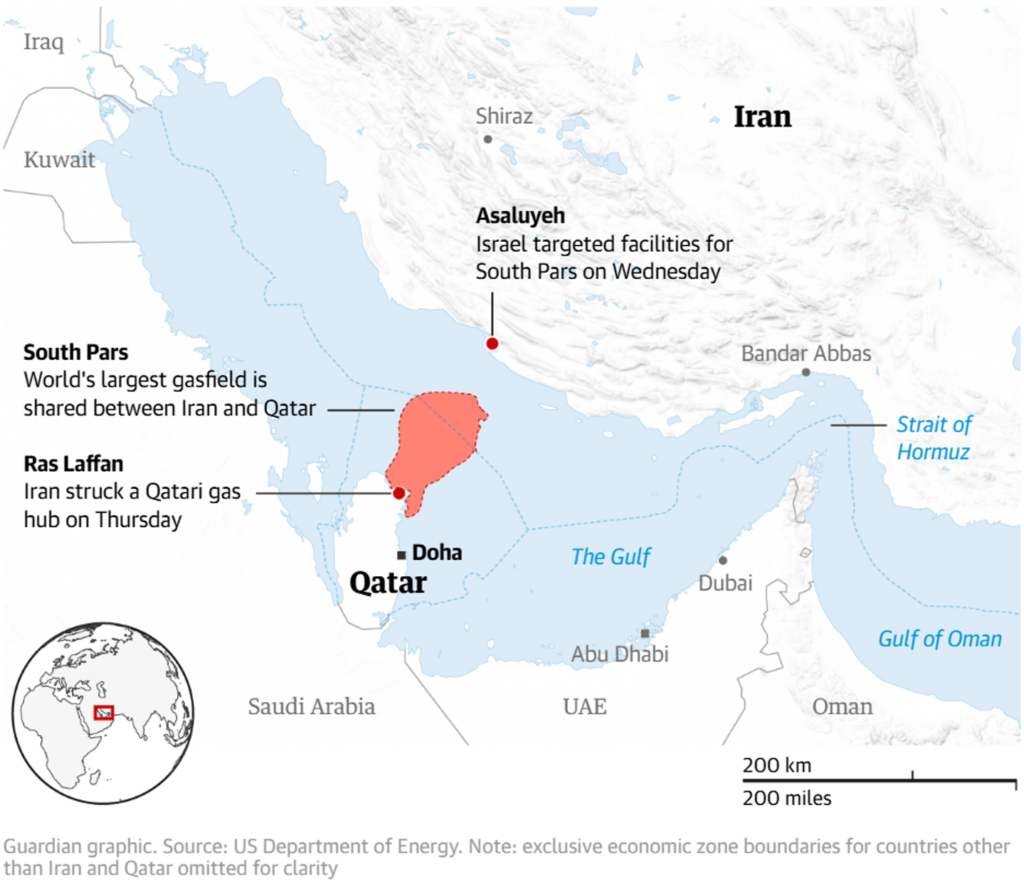
The world’s largest gas fields, South Pars/North Field in Iran and Qatar, were attacked, and Qatar’s Ras Laffan LNG export port (the world’s largest) was partially halted.
The attack reduced global LNG exports by approximately 20%, with repairs expected to take 3–5 years. The attack also led to a decrease in LNG exports from Qatar and caused LNG spot prices in Asia to surge by 50-120%.
The petrochemical industry in Saudi Arabia.
The Sadara Chemical Complex in Jubail (the world’s largest single-phase production facility) has completely shut down all 26 of its production units, resulting in a loss of approximately 3 million tons of chemicals per year from the global market.
Affected products include:
Polyethylene (PE)
Polypropylene (PP)
Ethylene glycol
Other chemical intermediates
Damage to refineries in countries in the GCC region.
Refineries in several Middle Eastern countries have been damaged, resulting in shortages of fuel and feedstocks. Refineries in Asia have had to reduce production, and Kharg Island, which accounts for approximately 90% of Iran’s crude oil exports, has also been affected.
Summary of areas damaged by war (data from March).

- At the Al Basra oil export port , exports are restricted.
- A Kuwaiti oil refinery was attacked by a drone on March 19.
- The port and refinery of Ras Tanura were attacked by drones on March 2nd, and recovery efforts are underway.
- The East-West oil pipeline is still operational ; Yanbu was attacked.
- The Ras Laffan gas port was attacked on March 2 and 18.
- The Fujairah oil port’s operations were disrupted by fighting.
- Kharg Island, a key oil export point for Iran, was attacked on March 13.
- Iran’s South Pars gas field , a facility, was attacked on March 18.
- Iran’s Jask export port is still operating.
Shipping routes were disrupted by the closure of the strait.
Shipping through the Strait of Hormuz has decreased by 90–95%, with many ships unable to access ports in the Gulf, even though the plants remain operational. More than 70 crude oil tankers are idle at sea in Asia. The closure of shipping lanes has forced a halt to upstream production due to storage limitations and raw material shortages.

The closure of the Strait of Hormuz and almost all shipping lanes would have serious consequences for global energy security and supply chains, especially for Thailand, which has a relatively high level of dependence on energy from the Middle East.
(summarize) What products are affected by the war?

Over 90% of exports passing through the Strait of Hormuz are destined for Asia, with India and China alone accounting for half of all crude oil and condensate exports, as well as 40% of liquefied natural gas exports. Europe is the main buyer of refined petroleum products, purchasing one-third of all diesel and jet fuel exports.
According to a 2026 report by JP Morgan Commodities Research, the impact of shortages is becoming most evident in low-income Asian countries, where imports of refined petroleum products have decreased by 35%.
While mainstream media focuses on oil prices and domestic oil reserves, Thailand relies on imports of urea fertilizer exceeding 50% via the Strait of Hormuz, while maintaining reserves only sufficient for approximately one month.
Considering the types of products and their applications in various industries, it’s no surprise that a prolonged crisis could have a significant impact on Thailand.
What are the impacts on the Thai economy and business sector?

The Strait of Hormuz crisis has had a severe impact on the Thai economy in three main dimensions:
Energy sector
Thailand relies on crude oil from the Middle East for approximately 50% of its consumption and LNG transported through the Strait of Hormuz for about 30%. Natural gas is the primary fuel for 50–66% of Thailand’s electricity generation, and energy imports account for 7–8% of GDP. This has resulted in a potential 125% increase in LNG procurement costs, putting pressure on the fuel adjustment charge (Ft) and industrial electricity costs.
Logistics and maritime transport
A Thai-flagged ship has been attacked, causing cargo insurance premiums to soar and shipping rates to fluctuate wildly due to detours through the Red Sea and Africa. The Thai government has responded with emergency fuel controls, the use of strategic oil reserves (approximately 61 days’ supply), and diplomatic negotiations with Iran regarding transit through the strait.
Industrial and manufacturing sector
Sectors heavily affected include petrochemicals and plastics, automotive and electronics, food processing and fertilizers, logistics and aviation, as well as construction materials, all of which rely on raw materials flowing through the strait, such as naphtha, LPG, methanol, and PP/PE plastic pellets. The impacts are therefore a chain reaction:
Energy → Raw materials → Production → Consumer price
Domestic oil reserves and imports of fertilizers for agriculture.
Thailand has reserves of crude oil and refined petroleum products totaling 4,925 million liters, sufficient to meet domestic demand for 38 days. When combined with another 1,746 million liters of crude oil currently in transit via tankers that have already passed through the Strait of Hormuz and are en route to Thailand, and an additional 1,124 million liters from other sources, the total reserves amount to 6,795 million liters, which would be sufficient for approximately 61 days of domestic demand. However, current countermeasures focus solely on oil reserves , while the crucial issue of access to fertilizers, a vital resource for agriculture, is largely overlooked.

Thailand relies heavily on imports of fertilizers and urea from the Middle East (via the Strait of Hormuz), accounting for over 50% of its total needs. This high proportion poses a significant risk to food security and agricultural production costs. Thailand currently holds only about one month’s supply of fertilizer. If imports do not resume, fertilizer prices will continue to rise, increasing production costs and declining farmer incomes.
How can Businesses and organizations survive this crisis?
Business continuity in a long-term crisis.
Closing the Strait of Hormuz may not be a short-term disruption, but rather a crisis lasting several quarters, where management decisions play a crucial role. Organizations should urgently begin asking these vital questions.
- What are the products, services, and activities that are key to the organization? How long can those activities be suspended?
- In supply chain mapping , what suppliers are connected to the Strait of Hormuz? Who are the key suppliers?
- Does the organization have a business continuity plan (BCP)? Are those plans still relevant and practical in the current context?
Identifying the organization’s key products, services, and activities.
This can be done through a Business Impact Analysis (BIA) to answer key questions that affect survival when an organization begins to be impacted by war and supply chain disruptions, such as the order in which critical products and activities need to be restored, the target recovery time (RTO) , or the maximum time the organization can withstand disruption (MTPD).

Identifying levels of dependence and performing supply chain mapping.
Identifying levels of dependence and conducting supply chain mapping is a popular process used in conjunction with BIA (Business Impact Assessment) and is another outcome of business impact analysis. Resource requirements for key activities reveal what resources are critical, which suppliers are important, and how to plan accordingly. You can read more about supply chain risk management here.

Business continuity strategies and BCP planning.
Having a good Business Continuity Strategy ( BCP ) can help organizations “survive and adapt” in geopolitical conflicts such as the US-Iran war in several dimensions, as follows:
- Minimize the impact of prolonged disruptions because the restoration of key activities can be prioritized based on the results of the BIA (Bio-Intensive Assessment).
- Identifying systemic risks in the supply chain: Having Supply Chain Mapping under BCP helps organizations visualize their dependence on suppliers, identify risky suppliers, and prepare appropriate contingency plans.
- Supporting management decision-making in uncertain times, an updated BCP helps enable decisions to be made based on acceptable risk levels and ensures consistent communication within the organization.
- Maintain customer and stakeholder trust by demonstrating readiness to manage crises.
Consult on business continuity with InterRisk Asia
The impact of the conflict in the Middle East between the United States and Iran has resulted in a global energy and supply chain crisis. This article helps readers understand the potential for a prolonged global impact of this crisis, particularly on Thailand, which has a high dependence on energy and fertilizer shipments via the Strait of Hormuz. It also suggests strategies for organizations to adapt and survive the crisis in the long term.
If you need experts to design and implement Business Continuity Service, our team is ready to be your partner in building resilience and stability for your business. With our support, you can be confident that no matter how the world changes, your business will continue moving forward seamlessly.
End-to-end consulting for the development of a robust BCMS, with pathways to ISO 22301 certification
Specialized training programs designed for both management and staff to enhance awareness and competency in BCMS practices.
Analysis of operational risks and disruption impacts to inform the development of targeted continuity strategies.
Structured exercises to validate your BCP and strengthen organizational preparedness and response capabilities.
Experienced consultants with hands-on BCMS expertise
Customized planning tailored to your business context.
Practical tools and templates, with expert support for testing and improvement.