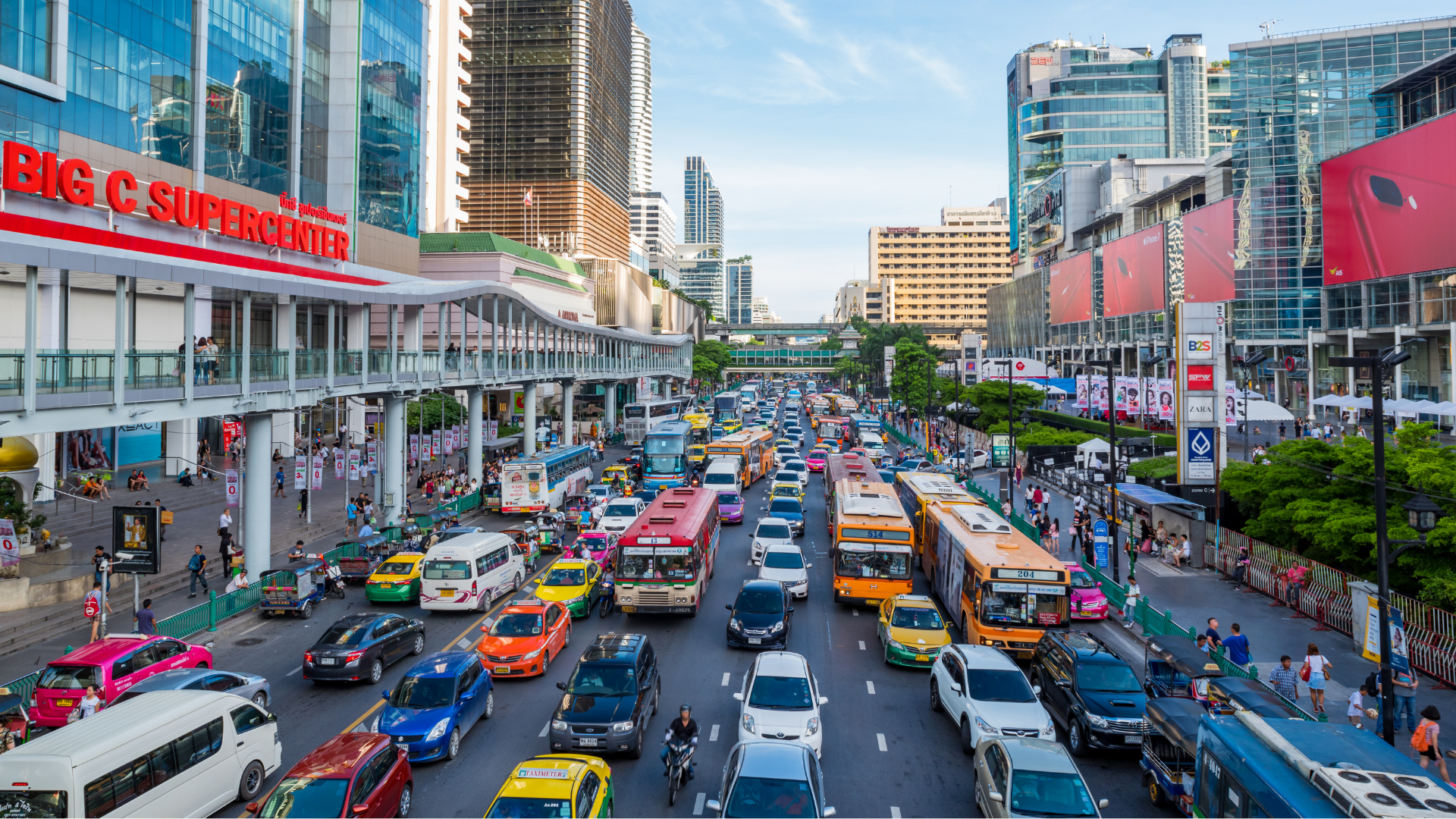

Thailand is a vibrant and popular travel destination, offering a diverse range of attractions from bustling cities to beautiful natural landscapes. However, using the roads in Thailand can be challenging for foreigners who are unfamiliar with local traffic conditions and driving culture, including heavy congestion, unpredictable lane changes, and the large number of motorcycles sharing the roads. According to data from the Thailand Road Safety Center (ThaiRSC), road accidents remain a significant concern, with 32,352 injuries and 579 fatalities reported in 2025, and motorcycles accounting for approximately 89.5% of all cases. These risks are especially evident during peak travel periods and in major provinces such as Bangkok and Phuket. Given these challenges, it is important for foreign visitors to understand safe practices when driving, riding, or walking. This article therefore provides key guidelines and a basic checklist to help foreigners use roads in Thailand more safely and confidently.
Checklist for Foreigners Using Roads in Thailand

Carry a valid International Driving Permit (IDP) or Thai driving license

Ensure you have proper insurance coverage

Always wear appropriate safety gear (helmet, seat belt)

Check the condition of your vehicle before traveling

Plan your route in advance

Do not consume alcohol before or while driving
Road Accident Involving Foreigners in Thailand
Roads in Thailand are complex and constantly in motion. Cars, motorcycles, public transport, and pedestrians all share the same space, often in unpredictable ways. In major cities like Bangkok, sudden lane changes, motorcycles weaving through traffic, and unexpected stops are common occurrences. While these may feel normal to locals, they can be highly challenging for visitors who are not yet familiar with Thailand’s unique traffic environment.
1. Road Rage Incident Between a Car Driver and a Rider in Bangkok

This incident occurred on Sukhumvit Road in Bangkok, where a foreign car driver and a motorcycle rider were involved in a minor collision. After the crash, both parties argued, and the situation escalated when the driver chased and rammed into the rider across multiple lanes. The rider was thrown into a roadside pole and later died from his injuries. This case highlights how minor accidents can escalate into fatal incidents due to road rage and emotional reactions. To prevent such situations, road users should remain calm, avoid confrontation, and resolve conflicts through proper legal channels. Additionally, this incident reflects the traffic environment in Thailand, where motorcycles, including delivery riders, are widely used, increasing interactions and the potential for conflict on the road.
2. UAE Tourists Involved in Multi-Bike Collision in Phang Nga

This incident took place on Phet Kasem Road, where a group of four tourists from the United Arab Emirates was riding motorcycles in a convoy. A serious collision occurred among them, leaving one person dead and three others injured. This case highlights the danger of group riding without maintaining safe distances, particularly on high-speed roads. To prevent such accidents, riders should keep safe following distance, avoid riding too closely in groups, and remain fully aware of surrounding traffic conditions.

A foreign man was killed in a nighttime motorcycle accident near Mabprachan Reservoir in Chonburi after losing control of his motorcycle and crashing into a parked trailer. This incident highlights the dangers of riding at night, when visibility is reduced, and obstacles may be difficult to detect. To minimize these risks, drivers should reduce speed, use proper lighting, and remain highly alert when traveling in low-visibility conditions.
4. Irish Tourist Struck While Crossing the Road

In Phang Nga, a 54-year-old Irish man was hit by an SUV while crossing the road at night and later died from his injuries. This incident highlights the vulnerability of pedestrians, especially in low-visibility conditions and in situations where drivers may not yield. To improve safety, pedestrians should use designated crossings where possible, check traffic carefully from both directions, and ensure that vehicles have fully stopped before crossing.
These incidents reflect real and ongoing risks on Thai roads, particularly for foreign visitors who may be unfamiliar with local traffic conditions and driving behaviors. Such unfamiliarity can significantly increase the likelihood of accidents. To reduce these risks, it is essential for visitors to understand local traffic rules, remain alert in different road environments, and adopt safe practices when driving, riding, or walking in Thailand.
Basic Traffic Rules Foreigners Should Know in Thailand
1. Driving System

Left-hand driving
Thailand follows a left-hand traffic system, which can be particularly challenging for visitors accustomed to driving on the right. Drivers need to adjust to differences in steering position, turning directions, and mirror use, especially at intersections and roundabouts where traffic flows from multiple directions.

Traffic lights
Traffic signals follow international standards. However, in real-world situations, drivers should remain cautious, as violations such as running red lights or accelerating through yellow lights can occur. A distinctive feature of Thai traffic is that motorcycles frequently weave between lanes (lane splitting), and the use of horns as a form of communication is considered normal.

Flexible driving behaviors
In Thailand, left-turn practices at red lights depend on traffic signs. If signs such as “turn left at all times” or “turn left when safe” are present, drivers may proceed after slowing down, yielding to pedestrians, and giving way to oncoming traffic from the right. If a sign indicates “turn left on green signal,” drivers must stop and wait for the traffic light. When no sign is present, drivers should not turn immediately but wait for the green light and ensure it is safe before proceeding.

Mandatory safety gear
Wearing seat belts (for driver and passengers) and helmets (for riders and passengers) is required by law
2. Driving Licenses
Required documents
Foreigners who wish to drive in Thailand must carry an International Driving Permit (IDP) along with a valid license from their home country or hold a legally issued Thai driving license. The minimum driving age is generally 18 for cars and 15 for motorcycles. Driving without an IDP may invalidate insurance coverage in case of an accident.
Vehicle rental equirements
Most rental companies require an IDP to confirm legal driving eligibility. Without it, you may not only be breaking the law but also risk losing insurance protection if an accident occurs.
Document checks
According to the Department of Land Transport, authorities can request to see your driving license at any time. Carrying complete and valid documents is essential to avoid legal issues and ensure peace of mind while traveling.
3. Other Important Laws
Mobile phone use
Drivers are prohibited from using mobile phones while driving unless a hands-free device is used, as distractions significantly increase the risk of accidents.
Speed limits
Speed limits vary by area. In general, urban areas range from 50–80 km/h, while highways may allow speeds of 90–120 km/h. Always follow posted speed limit signs carefully.
Drink driving laws
Thailand enforces a blood alcohol concentration (BAC) limit of 0.05% for drivers aged 20 and above, and 0.02% for those under 20. These laws apply to all drivers, including foreign visitors. Exceeding these limits may result in fines and imprisonment. Alcohol impairment significantly reduces reaction time and increases the likelihood of road accidents.
Traffic signs
Traffic signs can generally be categorized into three main types: regulatory signs, mandatory signs, and warning signs.
Regulatory signs
Indicate traffic laws and restrictions that must be followed. They are typically circular with a red border or rectangular with clear text, often using symbols to show prohibitions.

Mandatory signs
Instruct drivers to take specific actions to ensure safe traffic flow. They are usually circular with a blue background and white symbols, indicating required directions or actions.

Warning signs
Alert drivers to potential hazards or changes in road conditions ahead. They are commonly diamond-shaped with a yellow background and black symbols, designed to attract attention quickly.

Checklist for Road Safety in Thailand
Motorcycles are widely used in Thailand and are convenient for navigating heavy traffic. However, they also pose higher risks due to road conditions, traffic behavior, and limited protection for riders. Extra caution is required, especially in unfamiliar or high-risk areas.
Driving in Thailand requires adapting to local traffic behavior as well as following official rules. Traffic can be dense and unpredictable, especially in major cities. Pedestrians are among the most vulnerable road users in Thailand, especially in areas with poor infrastructure or heavy traffic.
Motorcycle Safety Checklist:

- Wear a certified helmet at all times
- Avoid high speeds, especially on unfamiliar roads
- Stay alert for vehicles changing lanes suddenly
- Be cautious when riding on uneven, sandy, or slippery roads
- Slow down when approaching curves or turns
- Avoid riding against traffic, even for short distances
- Ensure you carry a valid driving license
- Stay visible, especially when riding at night
Driving Safety Checklist:

- Drive on the left side of the road
- Follow speed limits and road signs
- Always use turn signals before turning or changing lanes
- Keep a safe following distance
- Watch for motorcycles filtering between lanes
- Be prepared for sudden stops or lane changes
- Stay alert at intersections and traffic lights
- Use the horn only as a warning signal, not aggressively
Pedestrian Safety Checklist:

- Use crosswalks or pedestrian bridges whenever available
- Check traffic carefully from both directions before crossing
- Ensure vehicles have stopped before stepping onto the road
- Avoid crossing at unmarked or unsafe locations
- Stay alert on uneven or obstructed sidewalks
- Be extra cautious when walking at night
- Avoid walking too close to traffic lanes
Summary
This information highlights that using the roads in Thailand as a foreigner requires both an understanding of traffic laws and the ability to adapt to an environment that may differ significantly from many other countries. Key challenges include complex traffic conditions, the high volume of motorcycles, and driving behaviors that may not always strictly follow the rules in certain situations, all of which increase the risk of accidents. This is reflected in consistently high road accident statistics, as well as real-life cases involving tourists affected while driving, traveling in groups, or walking.
The information also emphasizes the importance of knowing basic traffic rules, such as driving on the left side of the road, holding a valid driving license, and complying with safety regulations. At the same time, it is crucial to be aware of the specific risks associated with each mode of travel, whether driving a car, riding a motorcycle, or walking, as each comes with its own set of precautions.
Ultimately, proper preparation, such as carrying the correct documents, using appropriate safety gear, and planning routes in advance, plays a vital role in reducing risks. With the right knowledge and awareness, foreign visitors can navigate Thailand’s roads more safely and confidently.
Reference
- https://www.who.int/docs/default-source/thailand/roadsafety/thailand-status-against-12-global-road-safety-performance-targets.pdf
- https://takemethailand.com/travel-tips/arrival-insights/driving
- https://www.thailandroutes.com/driving-in-thailand-2025-complete-guide-for-foreigners-tips-traffic-rules-and-drivers-license-requirements/
- https://www.khaosod.co.th/breaking-news/news_9599534
- https://www.khaosodenglish.com/news/2025/12/13/uae-tourist-killed-as-four-motorcycles-crash-in-phang-nga/
- https://www.pattayamail.com/news/foreign-motorcyclist-killed-in-late-night-crash-off-pattaya-near-mabprachan-reservoir-529798
- https://www.thesun.ie/news/14899610/irish-tourist-killed-struck-car-thailand-crossing-street/
- https://safeeducationthai.com/turn-left-sign/
- https://www.thairsc.com/