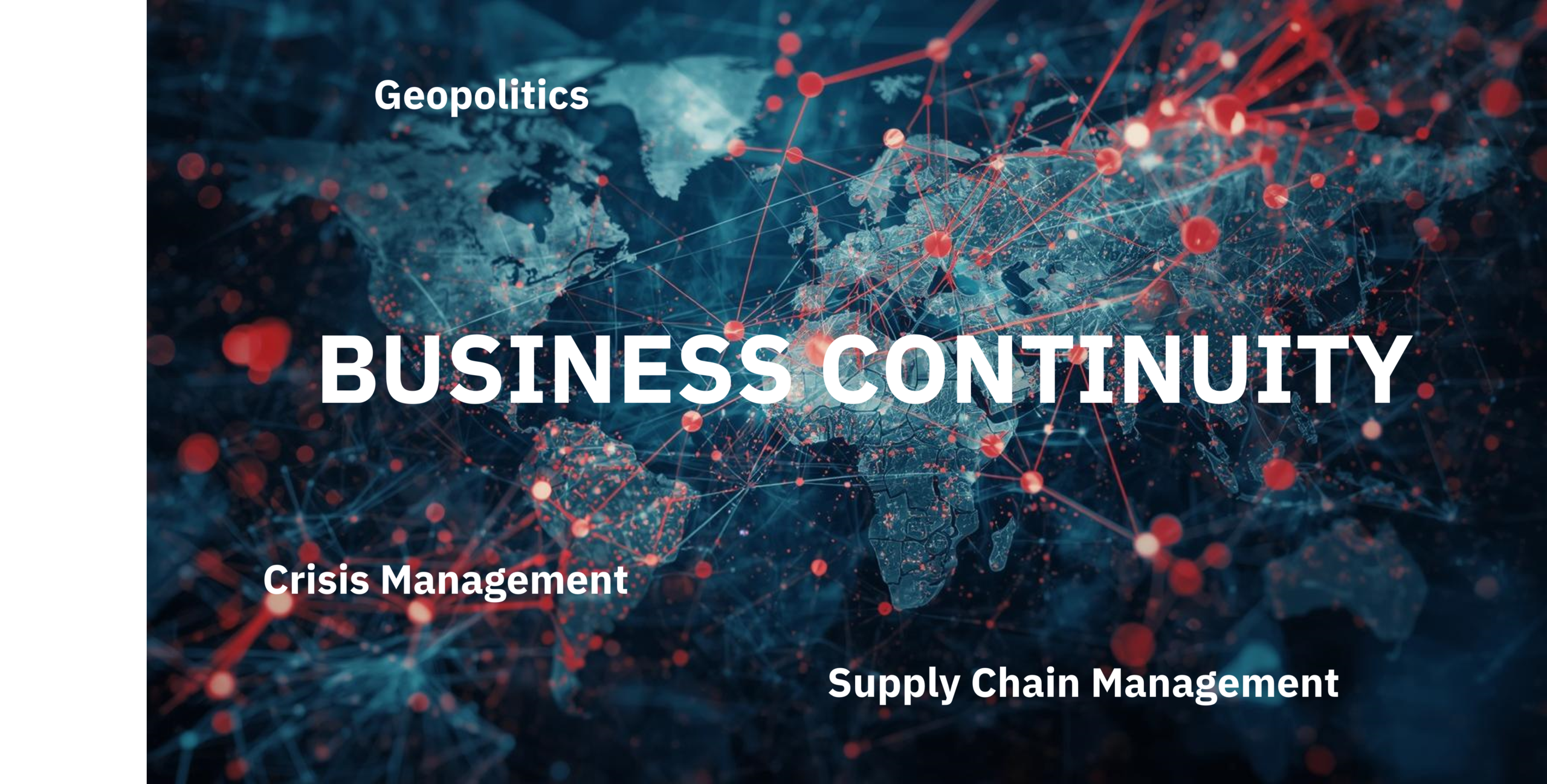
At the World Economic Forum 2026 in Davos, global leaders reflected on a new reality for the world economy—one no longer defined by “temporary uncertainty,” but by structural volatility deeply embedded in global economic and political systems. The interwoven dynamics of geopolitics, trade, technology, and climate are exerting mounting pressure on supply chains at every level, from production to distribution.
According to Global Value Chains Outlook 2026 by the World Economic Forum, Global supply chain are facing a “new reality” marked by persistent volatility and continuous disruptions —challenges that can no longer be dismissed as temporary events. This shift elevates Business Continuity Management Systems (BCMS) to the core of organizational resilience. Companies must not only prepare for natural disasters or technical risks, but also integrate geopolitical analysis into their continuity planning in a serious and systematic way.
HIGHLIGHTS:
Geopolitical risks —such as political conflicts, sanctions, or shifts in trade policy —can trigger immediate disruptions in supply chains. Businesses that rely heavily on foreign suppliers may face raw material shortages and rising costs. To mitigate these challenges, organizations need to develop contingency plans and diversify risks across multiple regions.
International tariff retaliation has driven up import–export costs and directly impacted production. Companies may be forced to relocate manufacturing bases or seek new partners to avoid these consequences. This uncertainty also leads investors to delay investments and erodes confidence in global markets.
Natural disasters such as floods, storms, or earthquakes can damage factories and critical infrastructure, while pandemics disrupt labor availability and restrict transportation. Both factors drive up operating costs and create pressure for businesses to invest in backup systems, insurance coverage, and enhanced health and safety measures.
Organizations can leverage Business Impact Analysis (BIA) to assess potential effects on operations, and Risk Assessment (RA) to evaluate the likelihood and severity of risks. The insights gained can then be used to design a Business Continuity Plan (BCP), ensuring proactive measures are in place to safeguard resilience and maintain operational capability.
Geopolitical Risks and Their Impact on Supply Chains

Geopolitical risks refer to international political factors such as military conflicts, sanctions, or shifts in trade policy that can directly or indirectly affect business operations and the global economy. These risks are particularly critical in Supply Chain Risk Management, which involves the interconnected systems of production and distribution across the world.
Trade Wars and Rising Tensions in Global Commerce
Trade Retaliation(Tit-for-Tat): When one country imposes tariffs, another often responds with similar measures.
Supply Chain Disruptions: Companies that rely on raw materials or components from abroad may face production and delivery challenges. In response, countries and businesses may seek new partnerships or relocate manufacturing bases to mitigate the impact.
Economic Uncertainty: Investors and businesses may delay investments due to risks that cannot be reliably predicted.
Regulation Changes and Government Policies
Cost Adaptation and Regulatory Compliance: Companies must make additional investments to comply with new regulations, such as environmental standards, labor safety requirements, or data protection mandates.
Business Uncertainty: Shifts in government policies—such as taxation, subsidies, or price controls—may force companies to rapidly adjust their strategies.
Supply Chain Restructuring: New regulations may compel companies to shift toward domestic suppliers or relocate production bases to avoid restrictions.
- New Business Opportunities: Shifts in government policies—such as support for clean energy or the promotion of local industries—can open doors for companies to innovate and expand into new markets.
Climate Change and Natural Disasters
Disruptions in Production and Transportation: Floods, storms, or earthquakes can damage factories, infrastructure, and transportation routes.
Rising Operating Costs: Companies must invest in preventive measures such as building backup energy systems, diversifying warehouse locations, or securing insurance coverage.
Resource Risks: Droughts and climate change affect the production of agricultural raw materials and energy supplies.
- Sustainability Pressures: Consumers and governments worldwide are demanding that businesses operate responsibly toward the environment—for example, by reducing carbon emissions and adopting renewable energy.
Geopolitics and Business Continuity
The Meaning of Business Continuity
• Business Continuity refers to an organization’s ability to continue operating even in the face of unexpected events such as political crises, natural disasters, or pandemics. • It involves systematic planning to ensure that businesses can keep serving customers and maintain credibility despite disruptions.
The Relevance of Geopolitics
• Geopolitics shapes the environment in which businesses operate—for example, trade tensions, sanctions, or policy changes. • These factors directly affect the supply chain, including production, transportation, and market access. • Without a Business Continuity Plan (BCP), organizations risk disruption, revenue loss, and diminished competitiveness.
Geopolitical Risk Analysis and Assessment
In managing geopolitical risks, organizations can apply internationally recognized frameworks such as Business Impact Analysis (BIA) and Risk Assessment (RA). These tools help businesses understand the potential impacts and the true level of risk to their operations and supply chains.
Threat Identification
Analyzing Geopolitical Risk Factors such as Trade Wars, Political Conflicts, Sanctions, and Shifts in Government Policy.
Likelihood
Use risk assessment to evaluate the likelihood of events, such as the risk of transportation routes being closed or restrictions on importing raw materials.
Impact Assessment
Analyzing how geopolitical risks affect an organization’s production, finances, and reputation.
Risk Prioritization
Apply risk assessment principles to prioritize which risks should be addressed first.
Risk Management and Mitigation Strategies
Diversification
Spread suppliers and production bases across multiple regions to reduce dependency.
Resilience
Invest in supply chain tracking technologies and build backup systems to prepare for emergencies.
Business Continuity Planning
Build collaborative networks with both public and private sectors to strengthen the ability to manage geopolitical risks.
Continuous Monitoring and Strategy Adjustment
Use geopolitical insights and trend analysis to adapt business strategies in real time.

Frequently Asked Questions (FAQs)
Which industries are most affected by geopolitical risks?
Industries that rely on global supply chains —such as automotive, electronics, energy, and food are often directly affected by sanctions, transportation disruptions, or changes in trade policy.
How does natural resource price volatility impact the energy industry?
Rapid fluctuations in oil, gas, and critical mineral prices compel companies to use risk assessment to evaluate cost-related risks and adjust investment strategies in line with the situation
How can organizations reduce geopolitical risks, and what actions should they take?
Organizations should use Business Impact Analysis (BIA) and Risk Assessment (RA) to evaluate the impact and likelihood of potential events. The insights can then be applied to strategies such as diversifying suppliers, building new partnerships, investing in supply chain tracking systems, and developing a Business Continuity Plan (BCP) to ensure operations can continue even during disruptions.
How to Start Developing These Plans?
Start by defining objectives, analyzing risks, prioritizing resources, assigning team roles, and regularly testing the plan to ensure it can be effectively implemented when an incident occurs.
Consult on business continuity with InterRisk Asia
Business Continuity Management (BCM) is a vital tool that helps organizations minimize disruptions and maintain competitiveness. By applying Business Impact Analysis (BIA) and Risk Assessment (RA), companies gain a clear understanding of the true impacts and can accurately prioritize risks.
If you need experts to design and implement Business Continuity Service, our team is ready to be your partner in building resilience and stability for your business. With our support, you can be confident that no matter how the world changes, your business will continue moving forward seamlessly.
End-to-end consulting for the development of a robust BCMS, with pathways to ISO 22301 certification
Specialized training programs designed for both management and staff to enhance awareness and competency in BCMS practices.
Analysis of operational risks and disruption impacts to inform the development of targeted continuity strategies.
Structured exercises to validate your BCP and strengthen organizational preparedness and response capabilities.
Experienced consultants with hands-on BCMS expertise
Customized planning tailored to your business context.
Practical tools and templates, with expert support for testing and improvement.